
An early arrival
In Kawazu, the flowers can generally be enjoyed around February. The timing changes with the weather, the site and the individual tree.
A cherry tree cherished by a family.A spring shared by a whole town.
Discover the flowers of Kawazu sakura and the story of the original tree in the Iida family garden, from its discovery to a cherished local tradition.
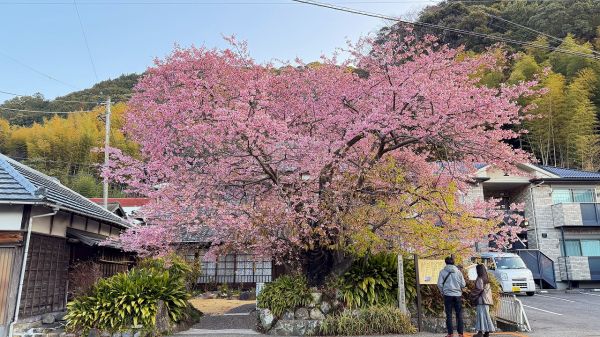
The pink blossoms lining the river have a story that leads back to one family garden in Kawazu. Behind the beautiful scenery is a quiet connection between a tree, a family and the people who helped its flowers spread.
An early-flowering cherry that begins to open while winter still lingers in Izu.
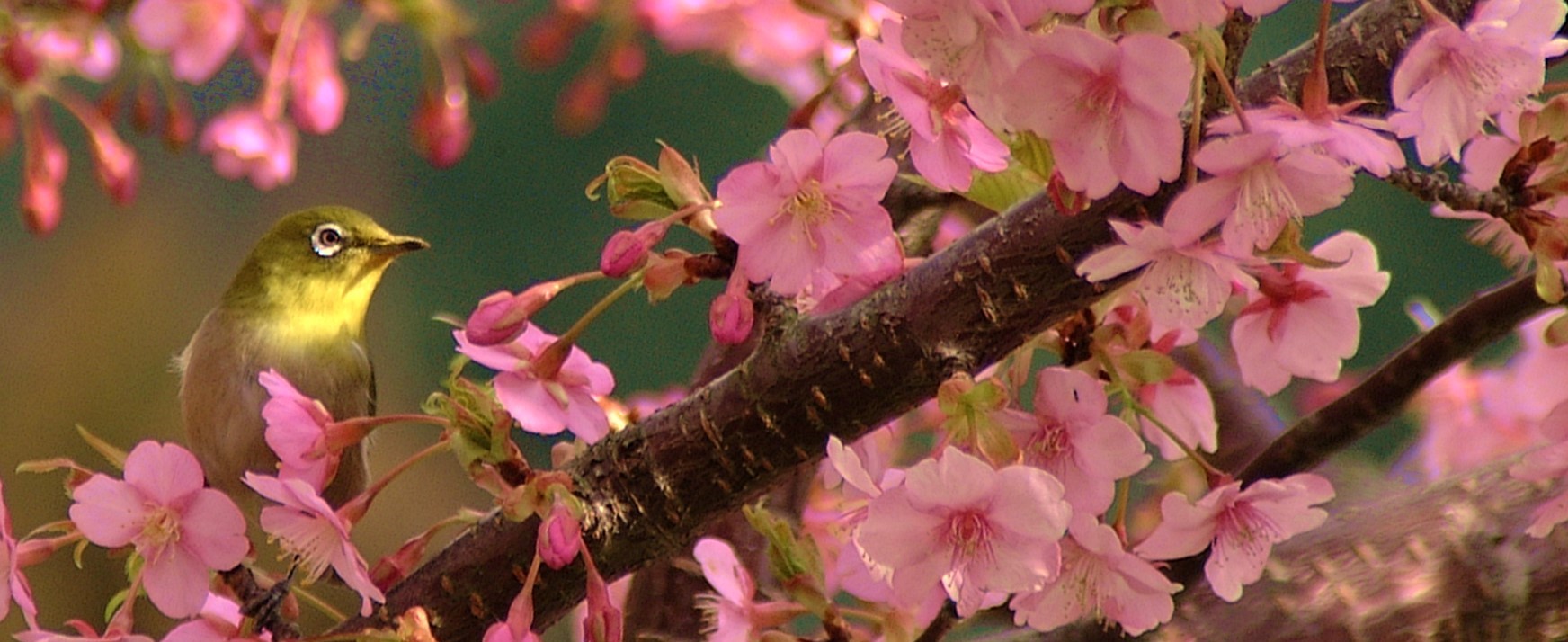
In Kawazu, the flowers can generally be enjoyed around February. The timing changes with the weather, the site and the individual tree.
The single flowers have five petals and a distinctive rich pink colour. Kawazu sakura is thought to have originated through natural crossing between Oshima-zakura and Kanhi-zakura lineages.
From the first flowers to fresh leaves, the tree may change over roughly a month. Individual flowers do not last a month: buds open in succession, gradually changing the scene.
Name used in the Japanese Flower Association’s cherry guide Cerasus × kanzakura ‘Kawazu-zakura’ [4]
Flowering dates and duration vary. Check the latest local blossom reports when planning your visit.
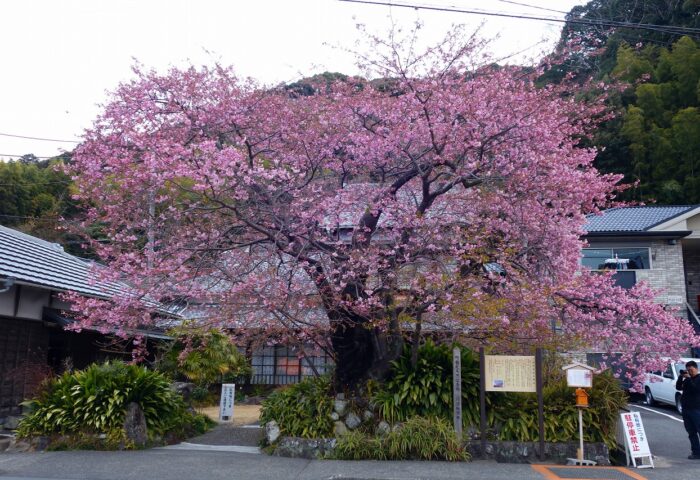
From one garden to a town in bloom.
Around 1955, Katsumi Iida planted a young cherry tree he had found near the Kawazu River in the garden of his home in Tanaka. It is the original Kawazu sakura tree known today.
The tree began flowering in 1966, about eleven years after planting. Its beautiful flowers, opening while the weather was still cold, drew the attention of neighbours.
The “Story of the Original Kawazu Sakura Tree” sign reproduced on the former website records an account by Hide Iida. It says Katsumi saw the tree flower before he passed away. When others later asked to acquire the tree, the family kept it as a treasured memory.
Locally, the tree was affectionately called “Komine no Sakura”, after the Iida family’s house name. Before it carried the name of the town, it was already part of the story of a home.
This family account is adapted from the historical sign reproduced on the former website: an account by Hide Iida; sign produced and installed by the Kawazu Chamber of Commerce youth division.
People nurtured it, propagated it and planted its descendants. Each played a part in the spring scenery we enjoy.
Katsumi Iida plants the young cherry tree at his home.
Its early blossoms begin attracting local attention.
Mr Katsumata (勝又光也) of Ito begins propagation, helping the variety become more widely planted.
The variety is named after the town where its original tree stands.
It is designated the town tree, and local planting continues.
The first festival is held in February, welcoming visitors to share the blossoms.
The original tree is designated a natural monument by Kawazu Town.
Conservation and care of the original tree and cherry avenues help carry this heritage forward.
Sources and editorial notes [1][3][5]
An imagined scene inspired by the Iida family and the original tree
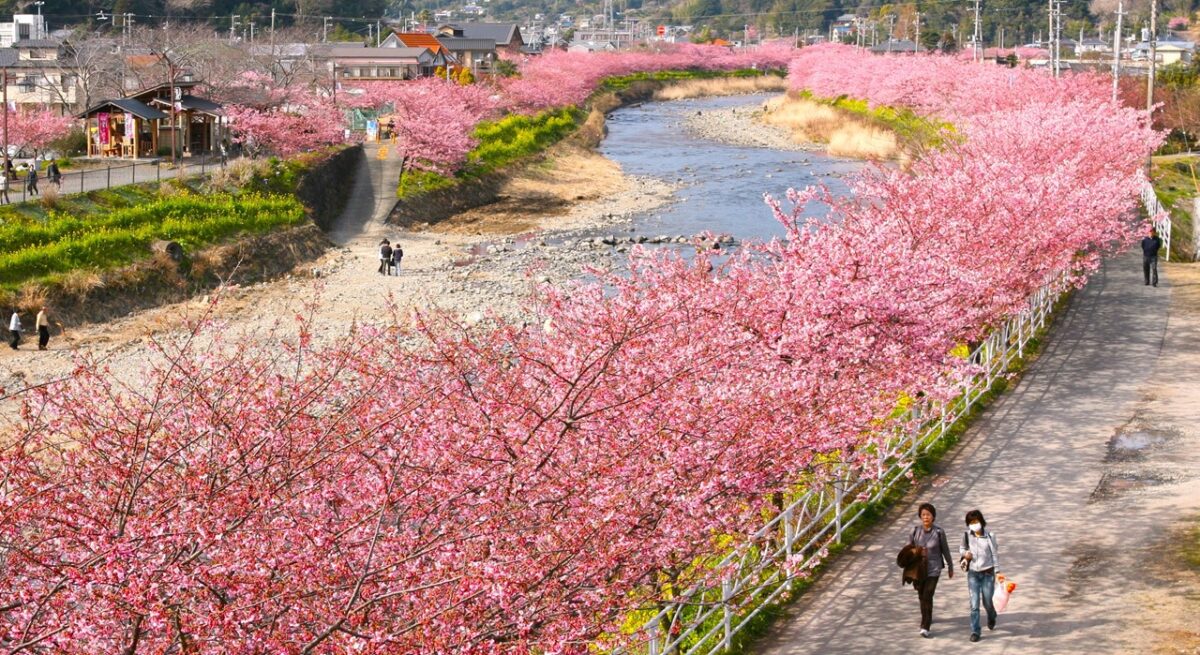
These cherry-lined views reflect both the years trees need to grow and the care people give them. The town, local residents and sakura caretakers continue conservation work. As you look up at the flowers, there is a human story to appreciate too.
Kōdan storyteller Ichiryūsai Teishin presents “The Story of the Original Kawazu Sakura Tree”. The video marks 70 years since planting and was recorded at the opening ceremony of the 35th Kawazu Sakura Festival on 1 February 2025.
Press play to load the YouTube player. If playback is unavailable, use “Watch on YouTube”. The performance is in Japanese.
The original tree stands in the garden of the Iida home in Tanaka, about 1.2 km from Kawazu Station in the direction of Mount Amagi. It makes a meaningful stop on a blossom-viewing walk.
May your visit to Kawazu bring you close to the flowers—and to the people whose care made them part of this town.
Adapted from the former information site and the historical sign, with additional public sources. Dates differ between some accounts. This page follows the historical sign and local visitor information in using “around 1955” for discovery and “1974” for naming.
Historical sign: “The Story of the Original Kawazu Sakura Tree” (former website)
Sources checked: 23 November 2026